THE GATES OF EDEN
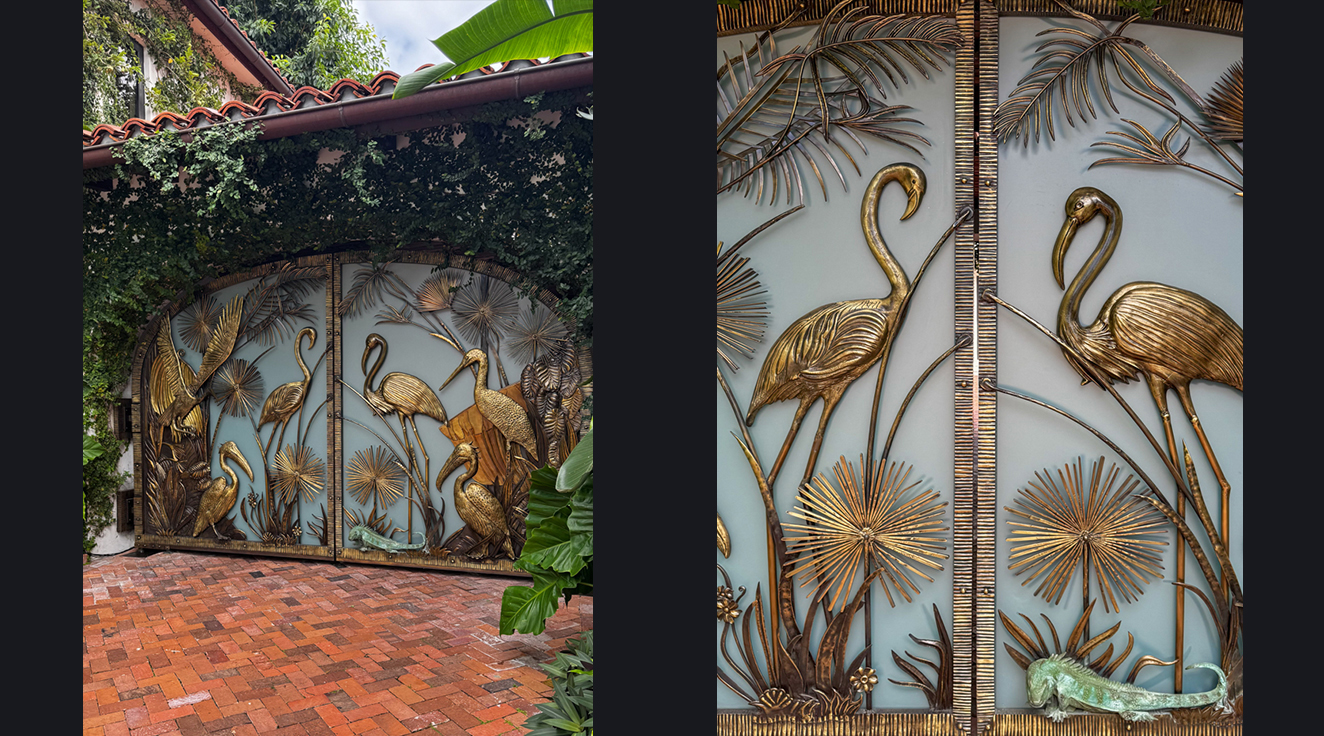
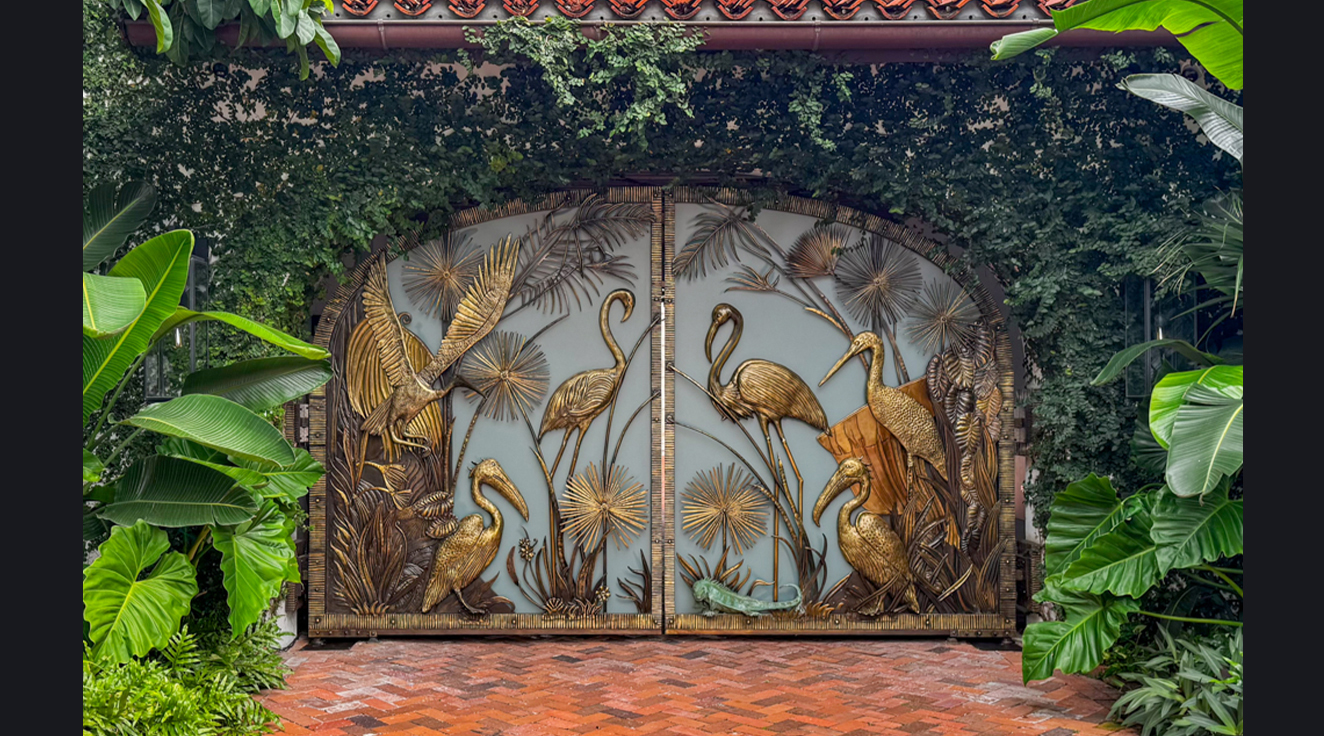
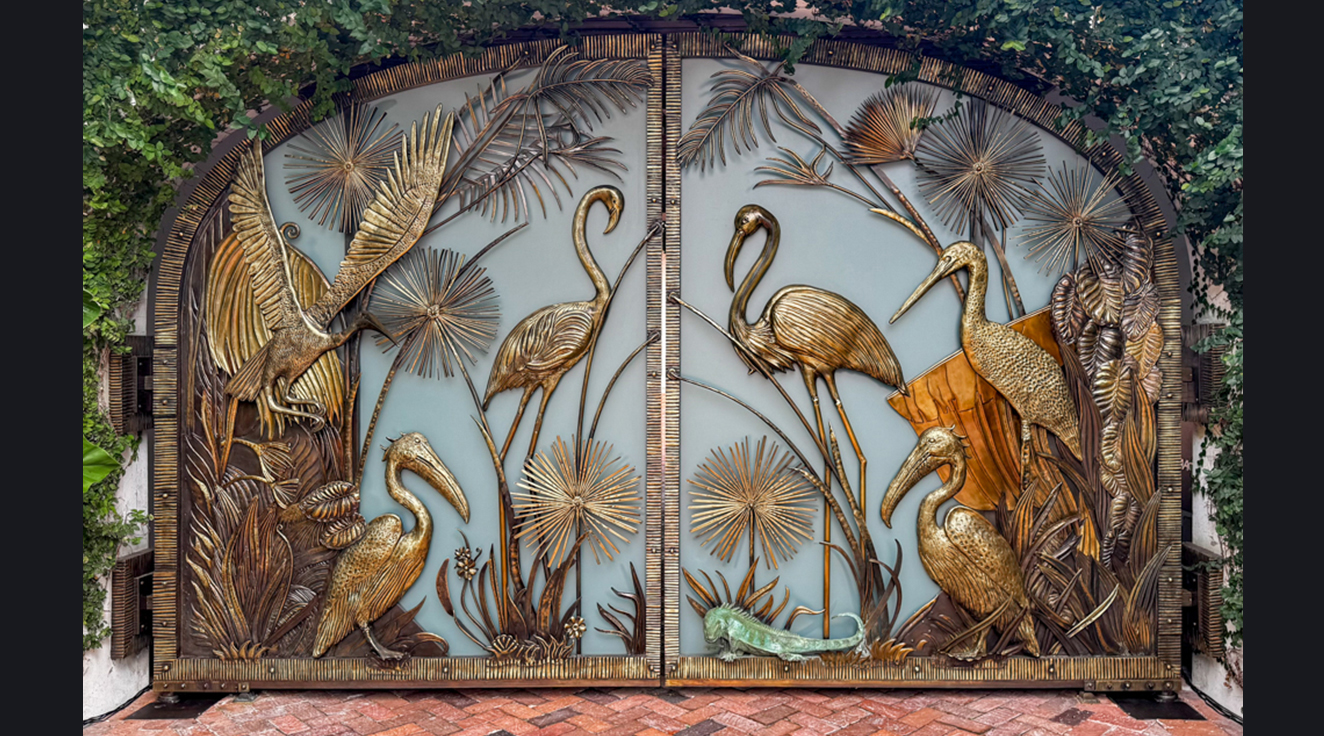
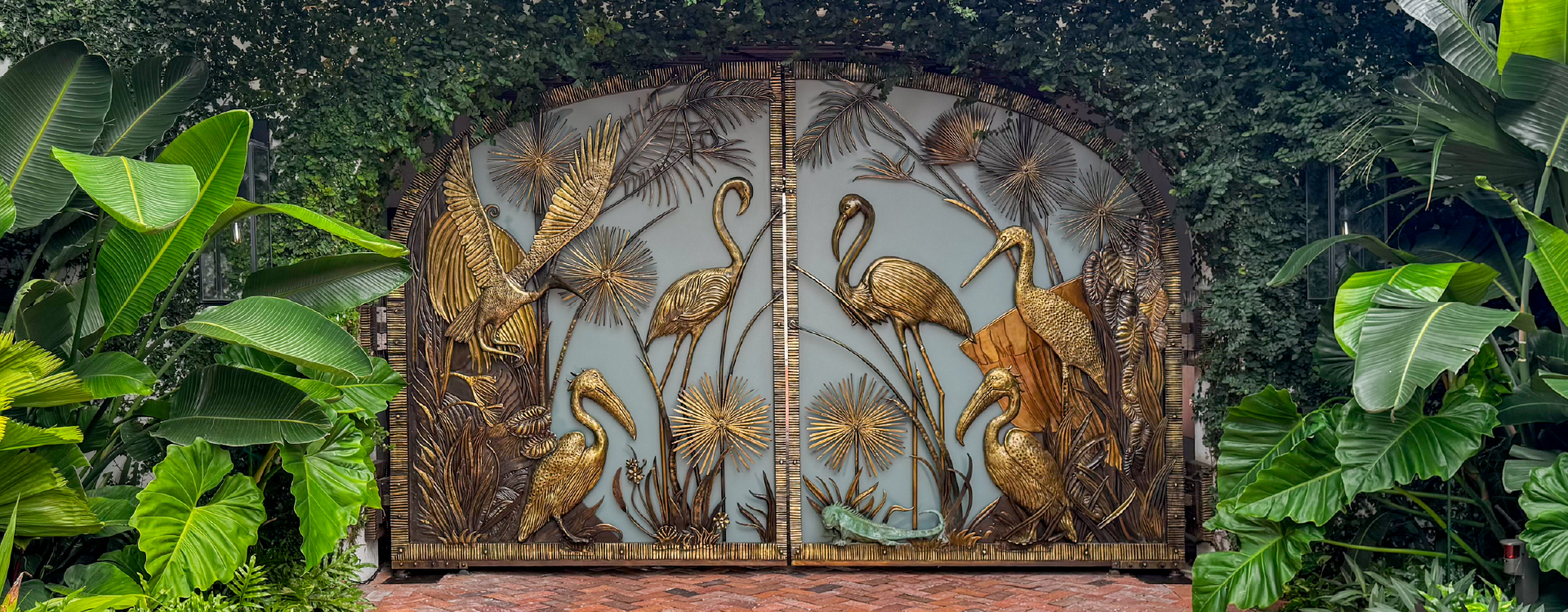
Overlooking the lush landscapes of Flamingo Drive in Miami Beach, an eclectic estate blending Portuguese and Spanish influences with the disciplined order of Art Deco and the organic elegance of Art Nouveau finds its defining jewelry at its very entrance. Set against a backdrop of opalized glass and climbing vines, The Gates of Eden serve as a seamless, double-sided continuation of the home's vibrant botanical character.
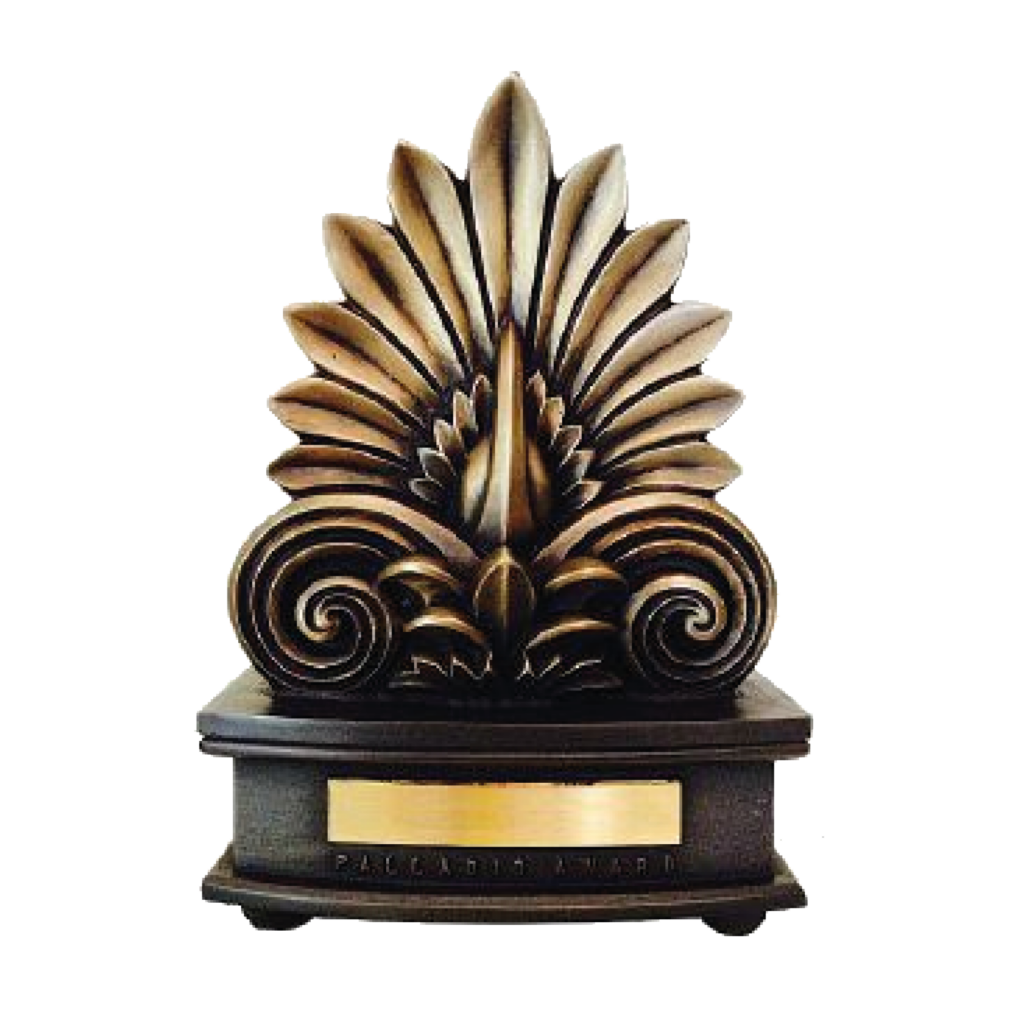
Born from a profound collaboration between designer Rafael Olarra, landscape architect Fernando Wong, and the artisanal mastery of BELT, this monumental bronze vehicular gate transforms a functional threshold into a living, sculptural narrative of freedom, beauty, and harmony with nature. This dedication to artistry and execution has been recognized with four prestigious industry honors: the Palladio Award, the Addison Mizner Award, the NOMMA Top Job Award, and the Luxe Red Award.



ADDISON MIZNER AWARD
Best in Craftsmanship
2025
NOMMA TOPJOB
Best in Forged Gates
2026
PALLADIO AWARD
Best in Craftsmanship
2026
LUXE RED AWARD
Best in Outdoor Accesories
2026
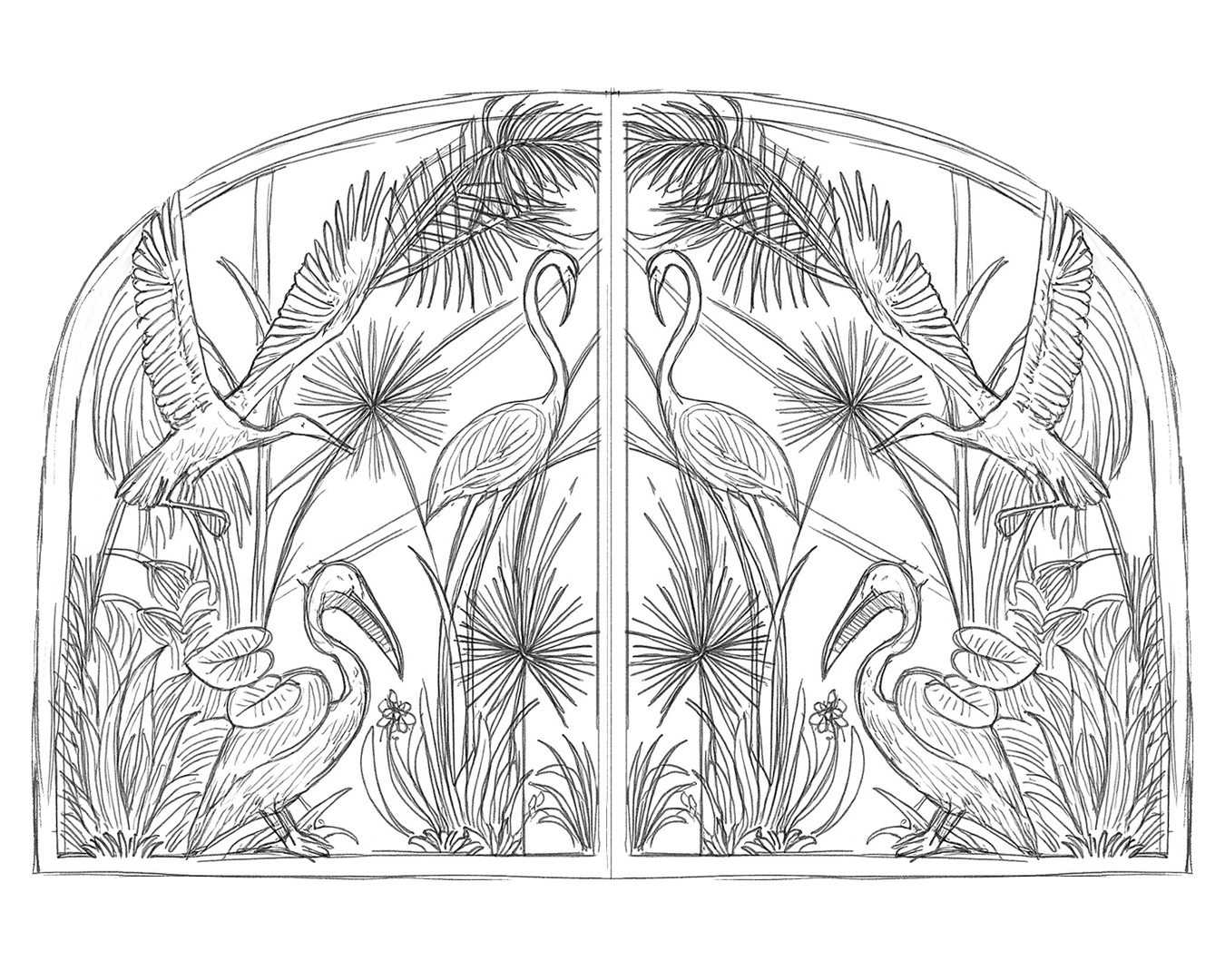
From Sketch to Shop Drawing Bridging the gap between imagination and rigorous engineering, the creation of this award-winning gate required a dance of art and precision. The process began with initial hand-drawn concepts and digital sketches that captured the soul of the design, exploring textures, feather patterns, and the spatial balance of the flamingos, pelicans, and blue herons among the tropical foliage. To ensure anatomical accuracy and lifelike movement before translating it to metal, every bird's form began as a clay model, hand-sculpted by Maestro Louis Beltran, that was then refined in plaster.
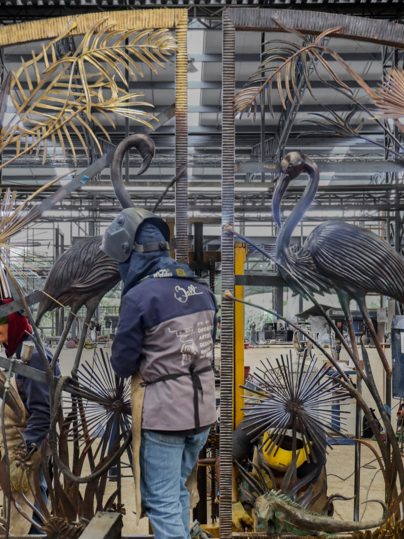
Translating this organic elegance into a functional structure then demanded precise technical drafts. Our shop drawings mapped out the complex structural intersections, ensuring that concealed anchoring systems were flawlessly plotted to bear the massive weight of the bronze. This guaranteed that the heavy sculptural elements aligned with millimeter precision to the site's specific measurements, integrating the figures without exposing their attachments.
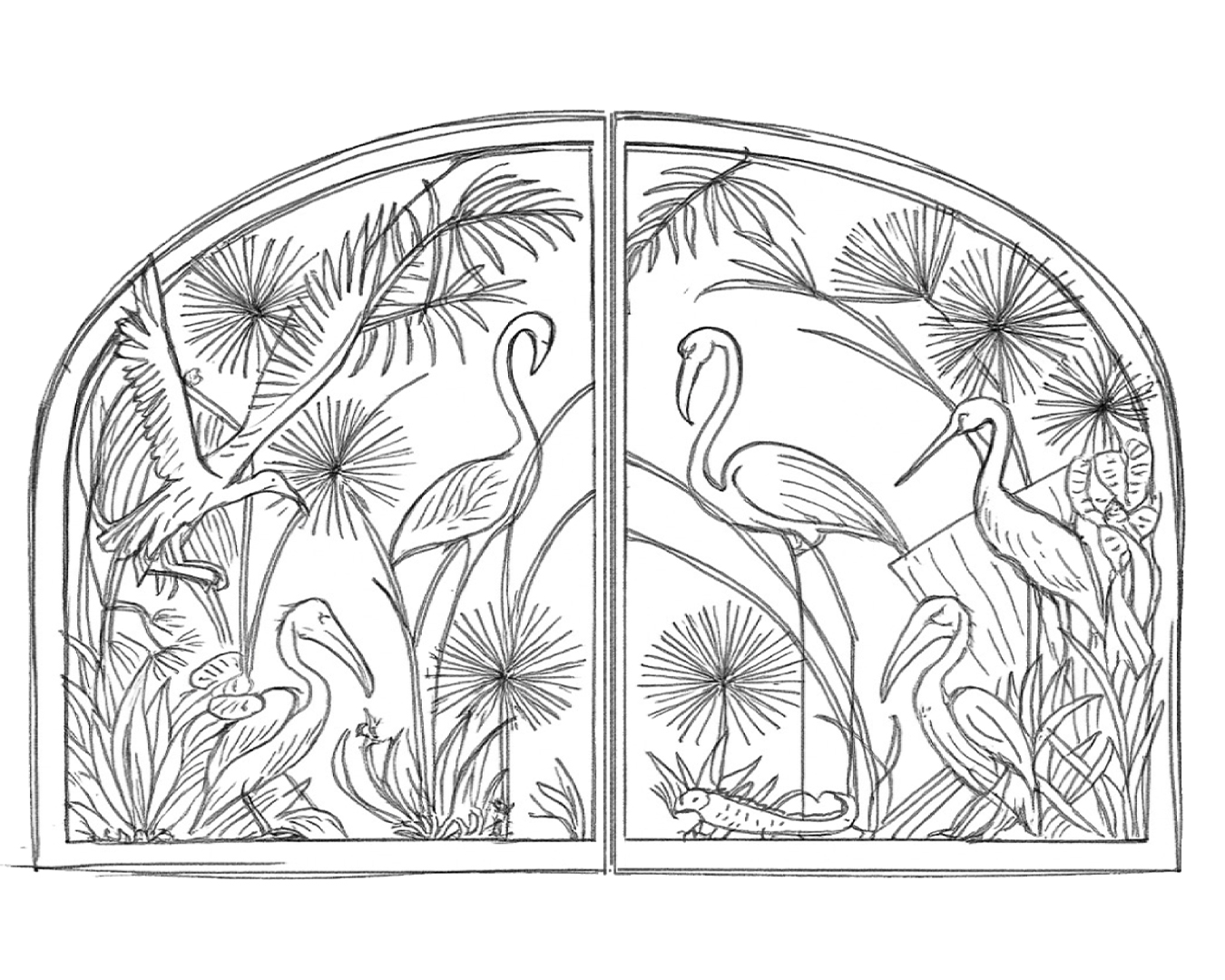
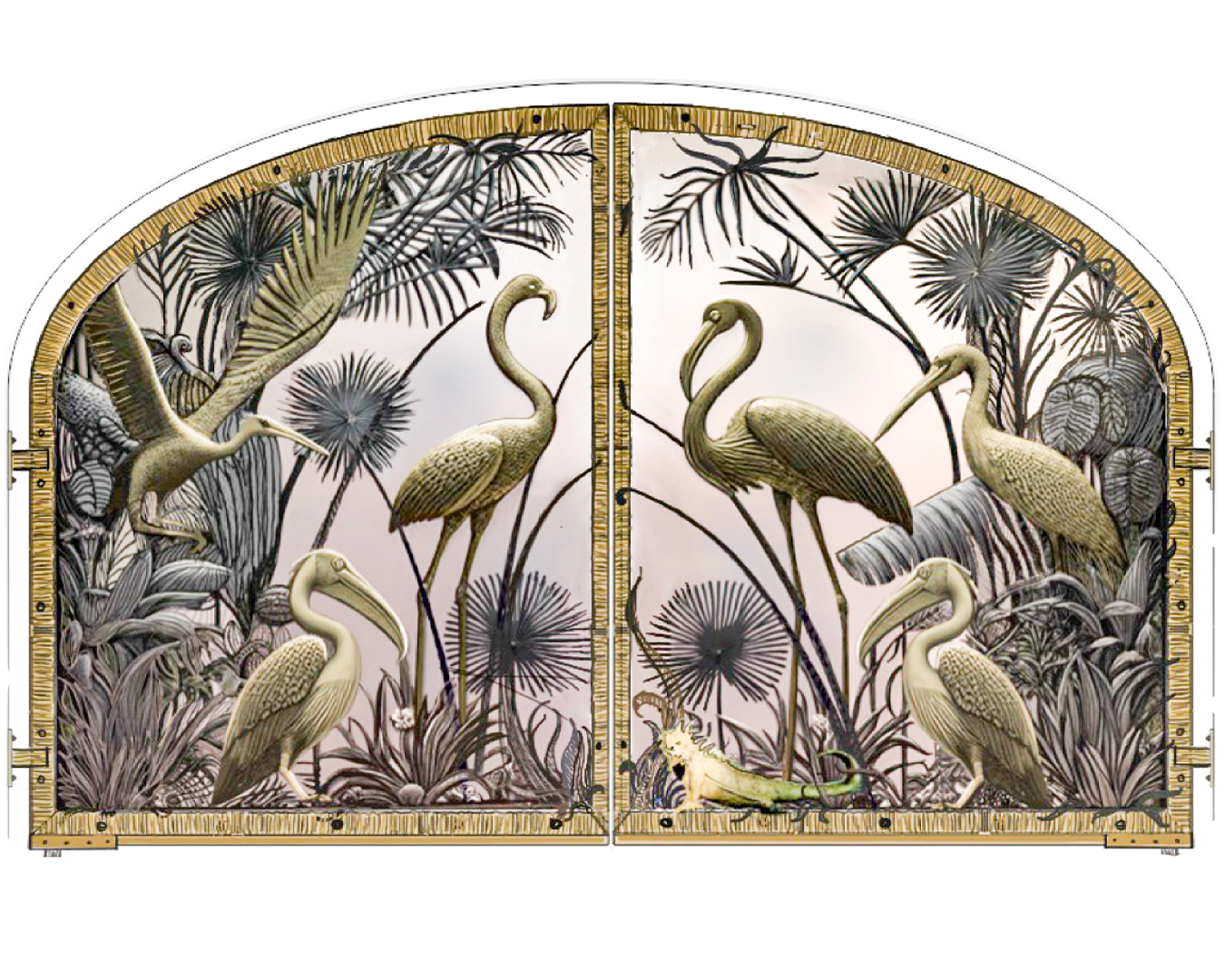
"This piece is the result of a lineage we continue to honor, preserving traditional metalworking techniques and allowing them to evolve into icons of the modern era." Maestro Louis Beltran
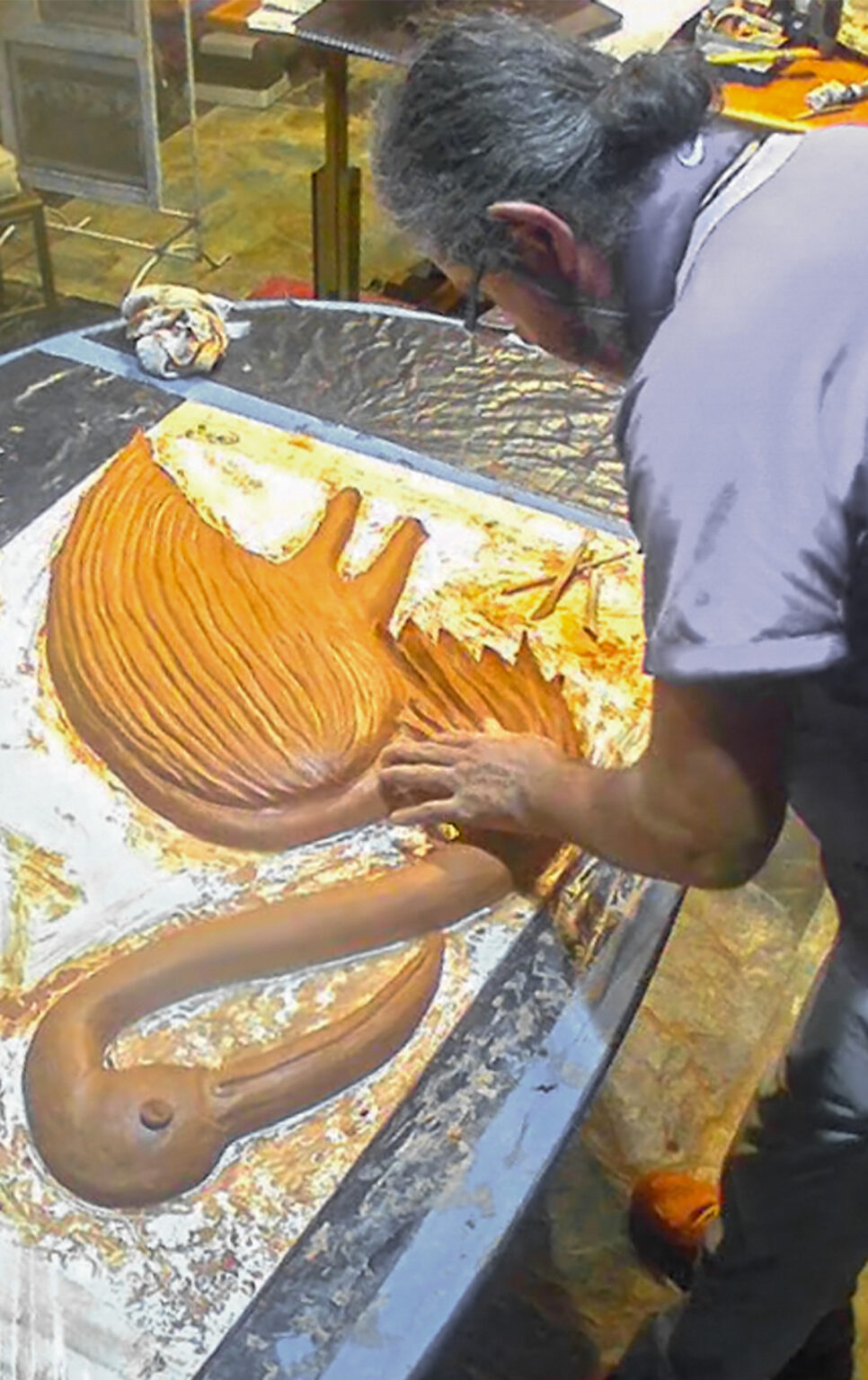
Under the creative direction of Maestro Louis Beltran, our master artisans transformed raw bronze into a botanical and zoological symphony using centuries-old methods.
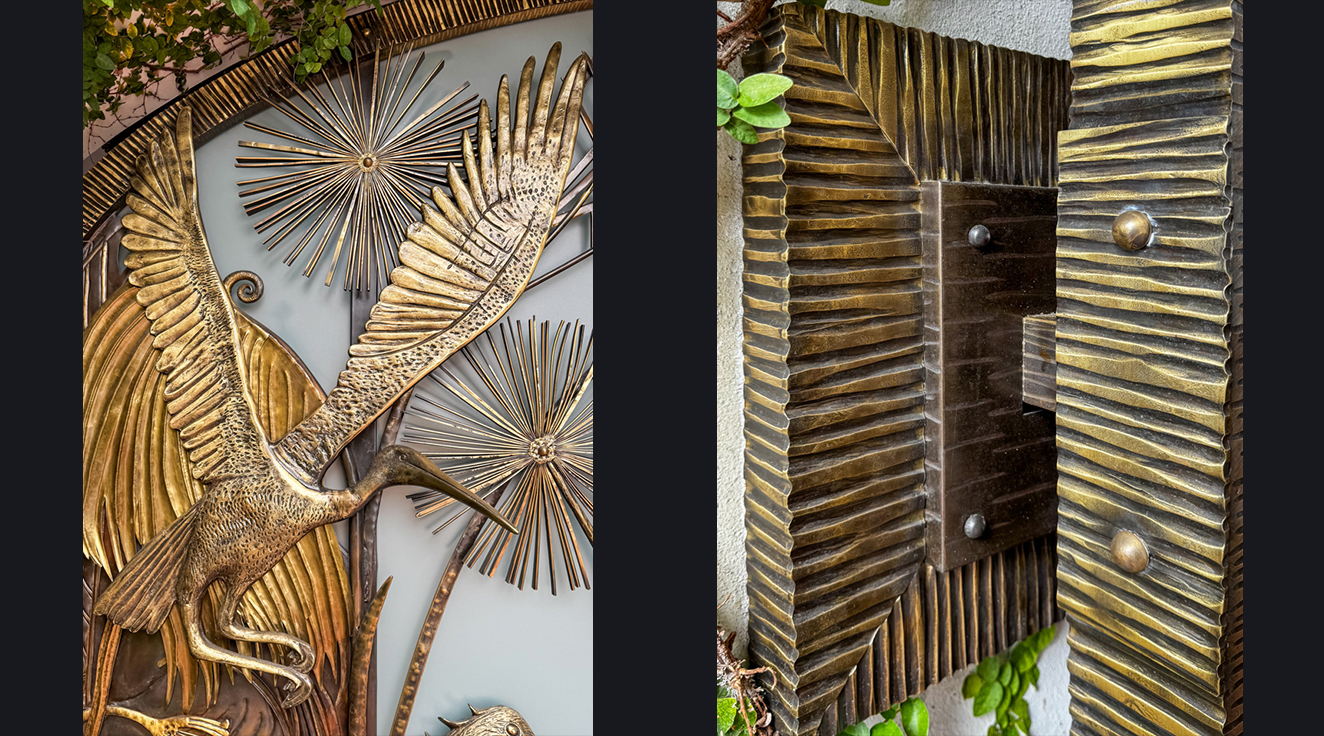
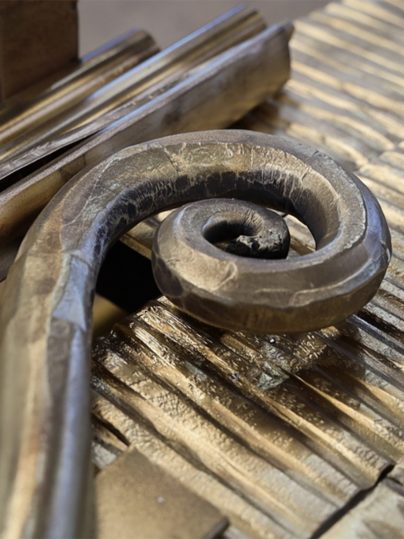
The ribbon-like structural frame was fire-forged with an anvil, striking the hot bronze with an iron rod to imprint texture and naturally emerge patterns following European traditions.
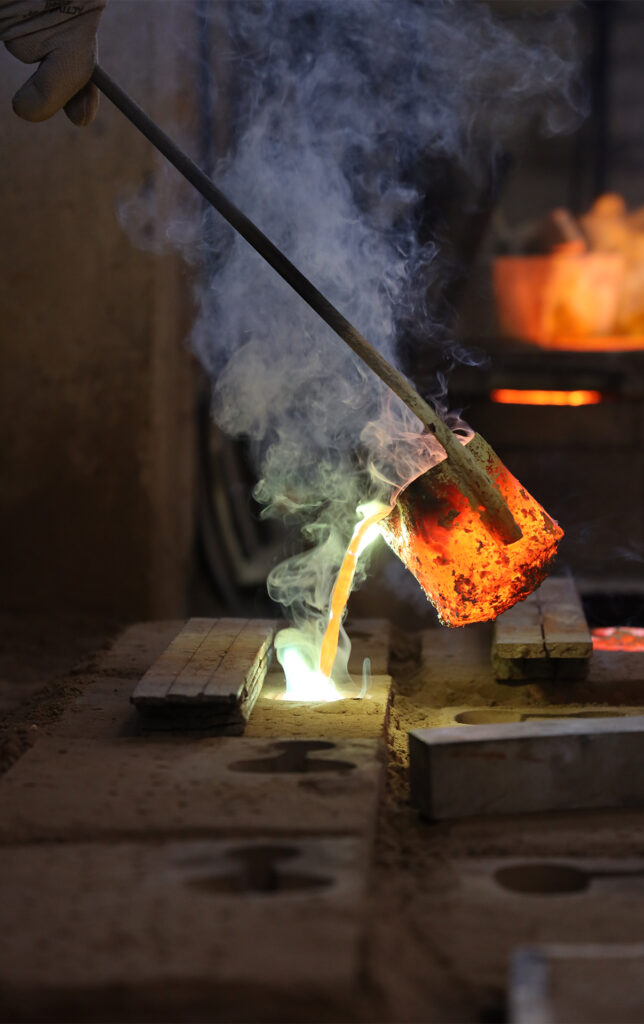
To create the highly detailed, three-dimensional figures of the local birds, melted bronze was poured into sand molds, a casting method inherited from Renaissance workshops.
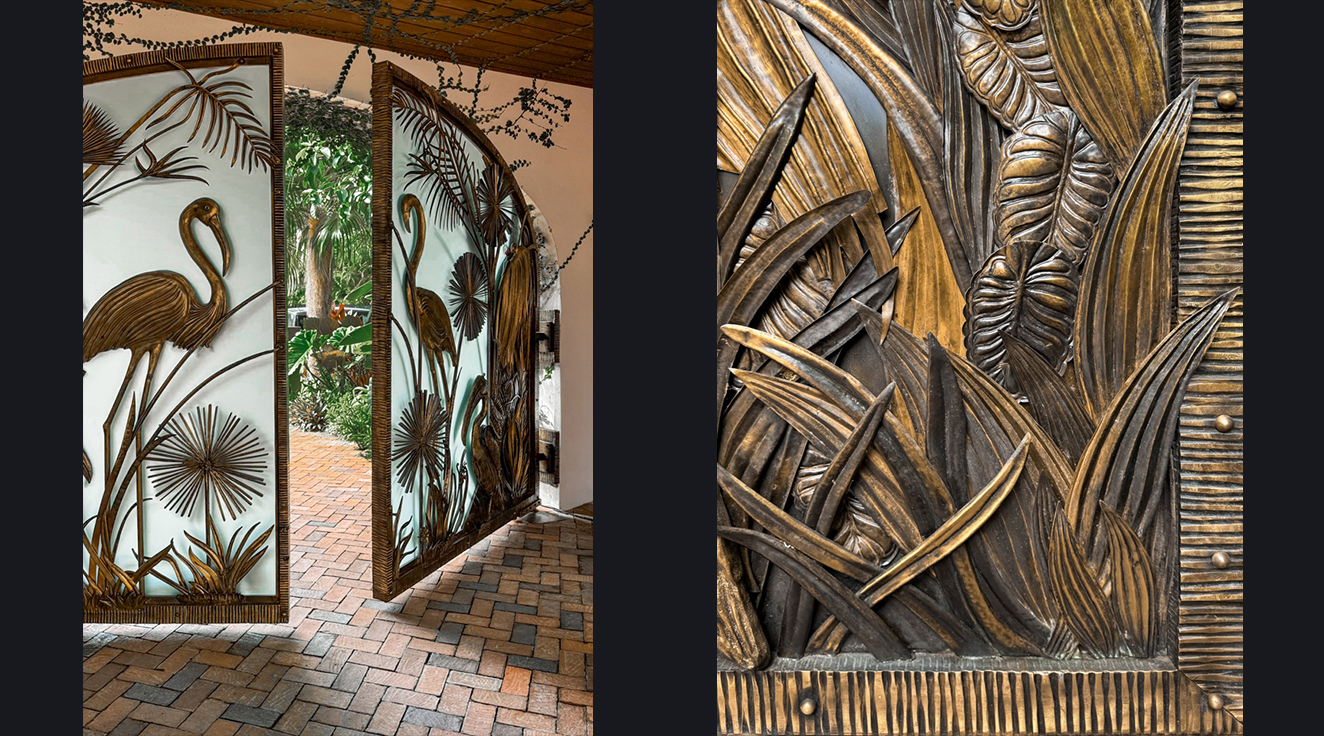
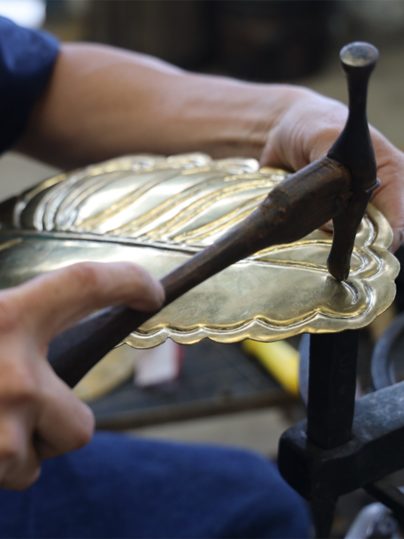
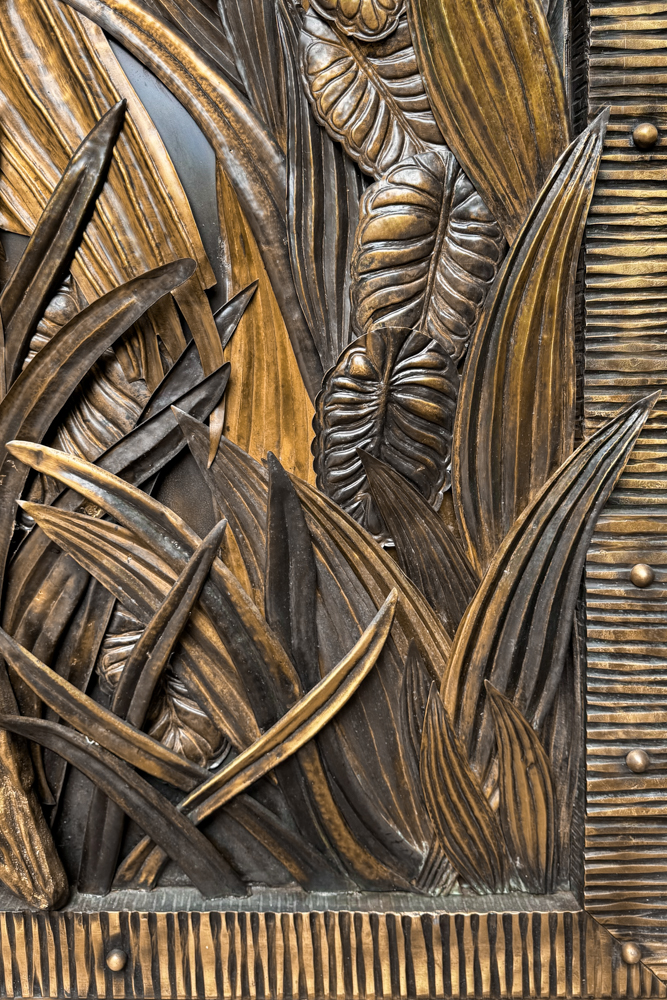
The delicate art of repoussé was used to shape the leaves, radiating fronds, and grasses by hammering the metal, bringing volumetric depth, veins, and fidelity to the foliage.
OUR
TIMELESS
ARTISTRY
The glow of the atelier illuminates the transformation of raw bronze as it flows from fire to sand mold, bearing the burn of creation to capture the intricate feathers of a heron in a single pour.
Through the rhythmic, deliberate strikes of the artisan's hammer, rigid bronze is coaxed into organic life, revealing the deep veins and sweeping, three-dimensional curves of tropical foliage.
Turning challenges into art
Every masterpiece has a hurdle, and The Gates of Eden presented a monumental challenge of scale, weight, and time. The varied gauges of bronze added immense weight, introducing significant mechanical hurdles for load-bearing and adapting a commercial motor.
Furthermore, the client requested that the birds appear to be in free flight, unattached to the frame, all while integrating opalized glass panels within a tight, three-month timeline.
Our design, development and manufacturing teams solved this by developing an innovative, concealed anchoring system.
Some birds were made fully detachable to allow for seamless glass installation and future maintenance. Through specialty assembly with entirely invisible welds and rigorous structural reinforcement, this moment of friction was transformed into the gate’s most celebrated feature: an effortless, floating illusion of nature in bronze.
Finally, hand-applied finishes brought the gate to life through custom patinas; layered finishes, including solid and washed bronze tones, were juxtaposed with vibrant verdigris—particularly on the resting iguana—creating a symphony of living color in metal.
To conclude the story of The Gates of Eden, we return to the voice behind its creative spirit: Maestro Louis Beltran. Reflecting on the project at the Addison Mizner Awards, he described it as “above all, a reunion, a convergence of many minds and many hands,” and a reminder that “we created something none of us could have achieved alone.” From the first sketch to the final signature, he saw the process as a living expression of what he calls “the alchemy of synergy,” a rare space where time flows, boundaries dissolve, and empathy, inspiration, talent, and love emerge. It is within that element, he noted, where ideas grow without limit, where we imagine, dream, love, and even find joy in the making. And in moments such as this, when metal becomes architecture and architecture becomes art, collaboration reveals its highest form.